
FOUNDATION REPAIR IN HEATH, TX
Foundation movement in Heath is driven by expansive Vertisol clays compounded by sloped lakeside terrain near Lake Ray Hubbard and mature hardwood root systems. Typical stabilization repairs run roughly $4,000–$12,000 depending on pier count and access.
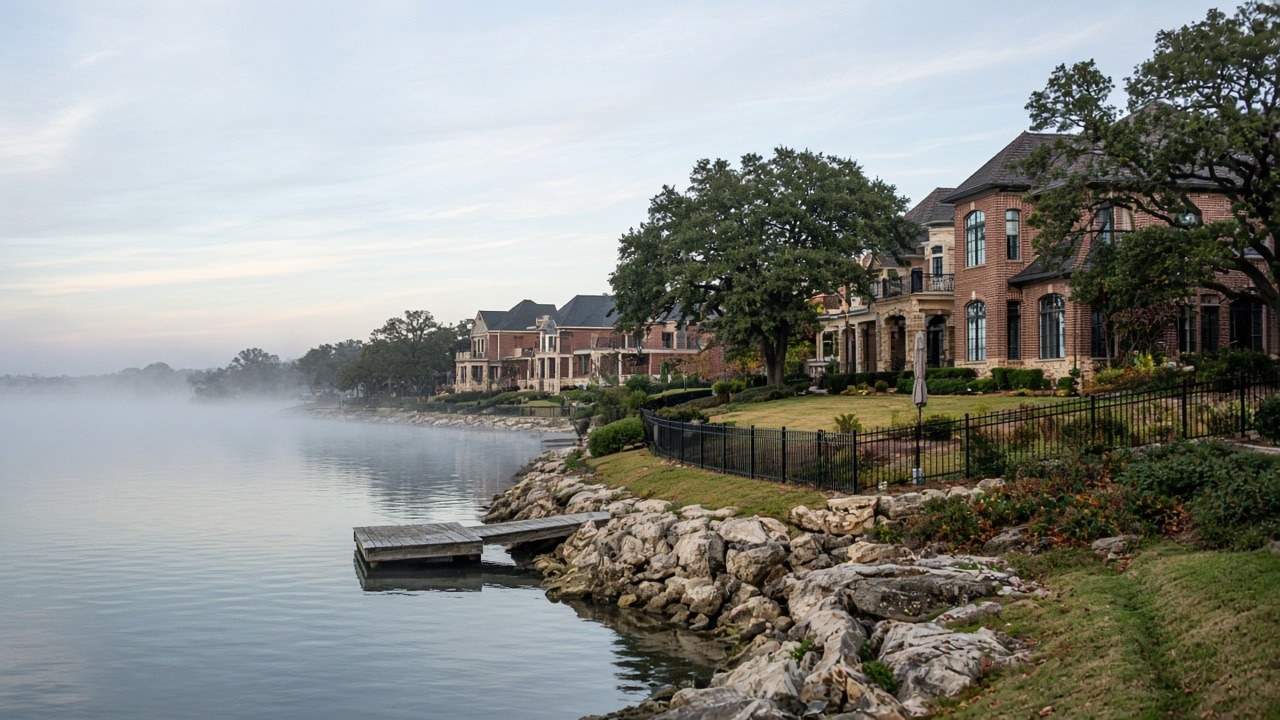
Foundation Repair in Heath, TX looks a little different from the newer tract streets in Forney. Heath's earliest settlers called the area the Black Hills for its rich black soil, the same expansive clay that moves foundations today. Situated primarily in Rockwall County along the eastern shores of Lake Ray Hubbard, Heath combines custom executive estates with rolling topography that channels rainfall and stresses slab-on-grade beams during seasonal moisture shifts.
Why Do Heath Homes Have Foundation Problems?
Heath homes experience foundation movement because approximately 82% of mapped local soils consist of high shrink-swell Vertisols, including Houston Black and Heiden clays. Rolling lakeside slopes create uneven drainage runoff, while deep-rooted hardwood trees extract moisture from beneath concrete perimeter beams, triggering differential slab deflection and interior wall shearing.
Unlike flat terrain where moisture distributes uniformly, Heath's terrain slopes downward toward Lake Ray Hubbard. When heavy spring rains fall, water migrates rapidly along hillside contours, pooling against the uphill grade beam while the downhill side drains dry. During extended North Texas dry periods, deep surface cracking develops, pulling clay away from exterior grade beams and allowing subsequent downpours to channel directly beneath the slab core.
Heath Neighborhood Footprints & Construction Patterns
In established custom communities like Buffalo Creek, developed primarily from the late 1980s and 1990s onward, homes feature sprawling layouts, heavy brick and stone masonry, and towering oaks. Larger custom footprints mean perimeter grade beams span wider distances, making them more susceptible to torsional strain when soil moisture fluctuates unevenly.
Meanwhile, in newer enclaves like the Heath Golf & Yacht Club, modern post-tensioned foundations are engineered for expansive soil but still rely heavily on consistent perimeter moisture management. Because Heath's municipal master plan prioritizes low-density residential development with half-acre to multi-acre home sites, repair plans often require greater exterior pier counts than standard subdivision lots.
How Much Does Foundation Repair Cost in Heath, TX?
Foundation repair in Heath typically costs roughly $4,000 to $12,000 for standard residential projects. Because many Heath homes feature larger floor plans, detached garages, or multi-wing construction, repairs requiring 15 to 25 structural piers or specialized steel underpinnings can exceed standard Dallas–Fort Worth averages.
Targeted corner or single-wall stabilization utilizing 6 to 10 pressed concrete piers along exterior grade beams.
Comprehensive two-sided or perimeter elevation correction (10 to 16 piers) addressing stuck interior doors and brick cracks.
Extensive multi-wing estate stabilization involving both exterior and interior piers, steel pilings, or deep clay mitigation.
*All figures shown are general regional estimates for the Kaufman and Rockwall County area, not binding quotes. Every foundation requires an elevation survey to determine actual pier depth and distribution.
Do Trees and Pools Affect Foundations in Heath?
Yes, mature shade trees and in-ground swimming pools significantly impact Heath foundations. A large hardwood can extract up to 100 gallons of moisture daily from expansive clay, causing localized sub-slab settlement. Meanwhile, pool decking and subsurface plumbing leaks create dramatic moisture gradients that lift or drop adjacent structural grade beams.
In neighborhoods where expansive custom pools are built close to rear foundations, any uncontrolled overflow, deck joint failure, or localized saturation can cause Houston Black clay to swell violently. Conversely, trees positioned within striking distance of unprotected footings suck moisture during July and August heatwaves, leading to rapid differential settlement. Proper drainage and French drains help maintain uniform moisture balance around the perimeter.
LAKESIDE AND SLOPED LOT CONSIDERATIONS
Properties sloping toward Lake Ray Hubbard frequently experience surface water migration during severe spring thunderstorms. If grading doesn't shed water at least 5 feet beyond the foundation perimeter, water accumulates against foundation grade beams, causing localized soil expansion that destabilizes interior load-bearing walls.
See our dedicated drainage correction guide and pier & beam restoration for crawlspace properties.
Foundation Repair in Heath, TX: Frequently Asked Questions
Age combined with established, mature shade trees means Buffalo Creek properties experience aggressive sub-slab moisture withdrawal during North Texas droughts. Regular perimeter monitoring, maintaining steady moisture via soaker lines, and verifying downspout extensions are essential preventive measures.
Heath home on clay? Get a foundation reading.
Phone-only contact. You speak directly with our foundation evaluation team. No forms, no sales queues.